Barley Field

Barley Field

Monday, January 13, 2014

We have Amber Malt!

It's been an interesting process but I have officially malted my first batch of barley.  

After spending too much time in the dehydrator I removed the rootlets.
At this stage I now have my basic pale malt and it tastes slightly sweet.  However, I decided I wanted to do a specialty malt and roasted the malt to create an Amber malt.  Below you can see the color difference between the pale malt (left) and the Amber malt I roasted (right).

 The roasted malt will settle its flavor in the next two weeks.

There are several things I will do differently in my next batch.  I'm also looking into buying something to help me determine the moisture content of barley.  I found that much of the process centers around moisture and you can't rely solely on average times for steeping, germination, and kilning.  The average times for each part of the process can very greatly depending on many factors including amount of grain being malted, moisture content, etc.

Thursday, January 9, 2014

Time to kiln...finally!

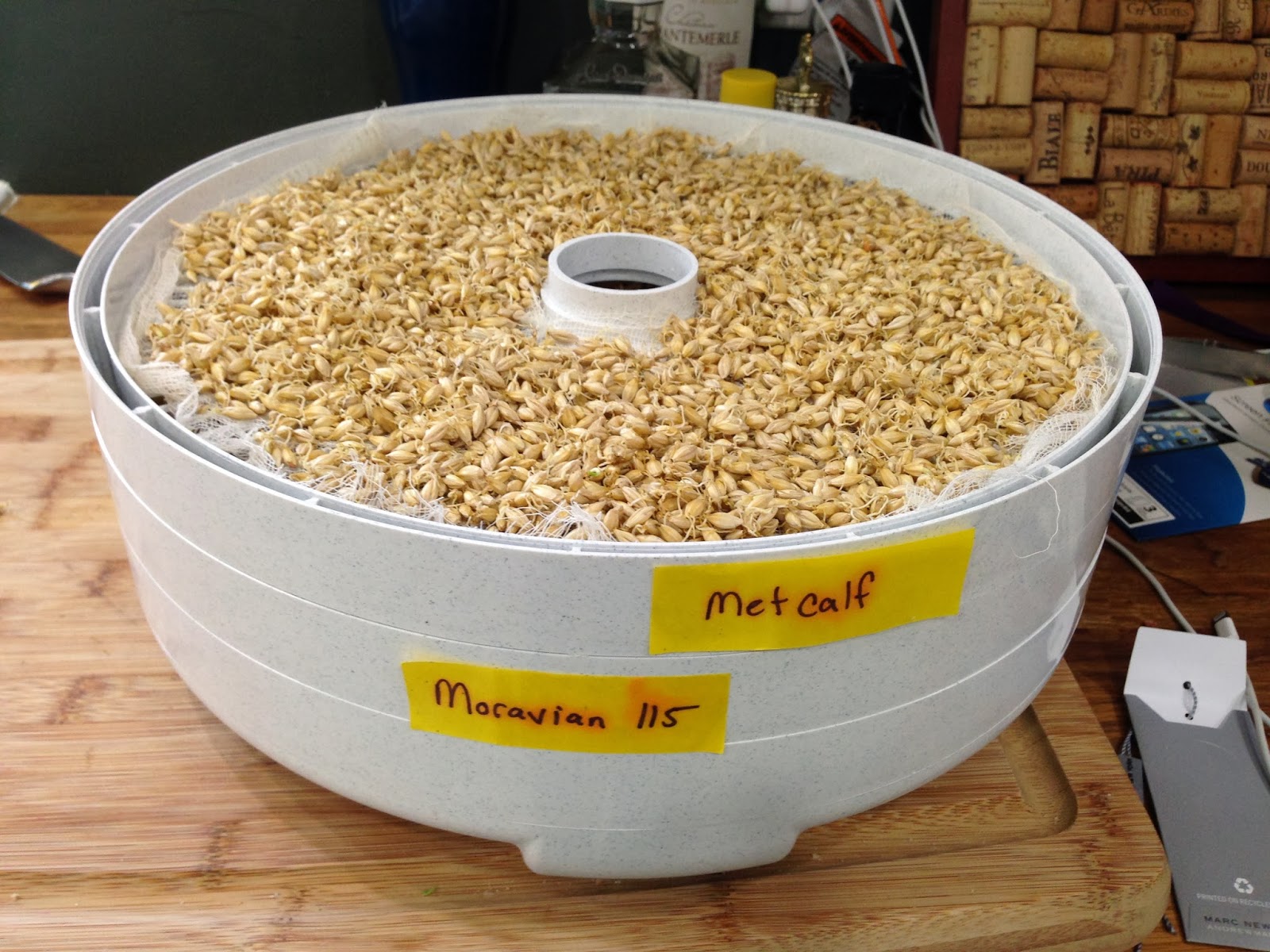
So...germination had a few hiccups but I'm finally at the point of being ready to kiln.  The acrospire is about three-quarters the length of the grain and there are about four rootlets on the barley grain.  


Germination took twice as long as expected.  I have a few theories about this, the most likely being that it got too dry.  I did rotate and spray the barley down every day with water, but the climate here is very dry and it was hard to keep on top of maintaining a consistent moisture level...thinking of investing in a humidifier for the cold room I used for germination.  I'm still optimistic as I've read that the slower the germination the better and it can take longer than the 5ish days on average Maltsters typically quote for germination.

Needless to say, this is an experiment and I'm learning.  Luckily the barley didn't die and I'm ready to kiln!!


I will be kilning at 100°F for about 22-24 hours.  I will then increase the temperature to 150°F for 2-4 hours until the moisture of the barley is as close to 3% as I can get (anything less than 6% should be fine from what I've read).  Once I've reached 3-6% moisture level I will remove the dried rootlets and roast for about 30 minutes at 350°F to produce an Amber malt.

Tuesday, December 31, 2013

Wanted: Craft Malthouse

Came across this article while researching malting.  While the focus is on the Pacific Northwest, I believe that the approximately 80 craft breweries in San Diego County would be equally as interested in a micro-malthouse locally.

http://www.seattleweekly.com/food/948398-129/barley-malting-malt-farmers-beer-brewers

Cheers!


Saturday, December 28, 2013

Germination Time!

The barley steeped for slightly over 41 hours. I tested the moisture level of both varieties and they came out to 44%. Since the moisture level falls on the slightly higher level of the goal range I will kiln them to be a slightly darker malt.

I have spread the barley out on slightly damp paper towels to germinate. I have created a moist and cool environment for them at about 67°F (19°C). My understanding is that the germination temperature should be a little lower; however, I don't have a method at home of keeping the temperature lower at this time, without it dropping too low. Since I am going for a darker malt, a slightly higher temperature should be fine.

I will stir the malt every day and moisten them lightly with a spray bottle filled with water as needed until the acrospire reaches its ideal conversion.


Friday, December 27, 2013

Air Rest...then continue the steeping!

Through my research I'm learning that there are a variety of methods that to keep the barley oxygenated during the steeping process.  If the barley is deprived of oxygen it could drown, which wouldn't be good!  I'm allowing the malt to air rest for a few hours before steeping again in fresh cold water overnight.  Tomorrow I will test the moisture level...


Early Barley Experimentation - Day 1

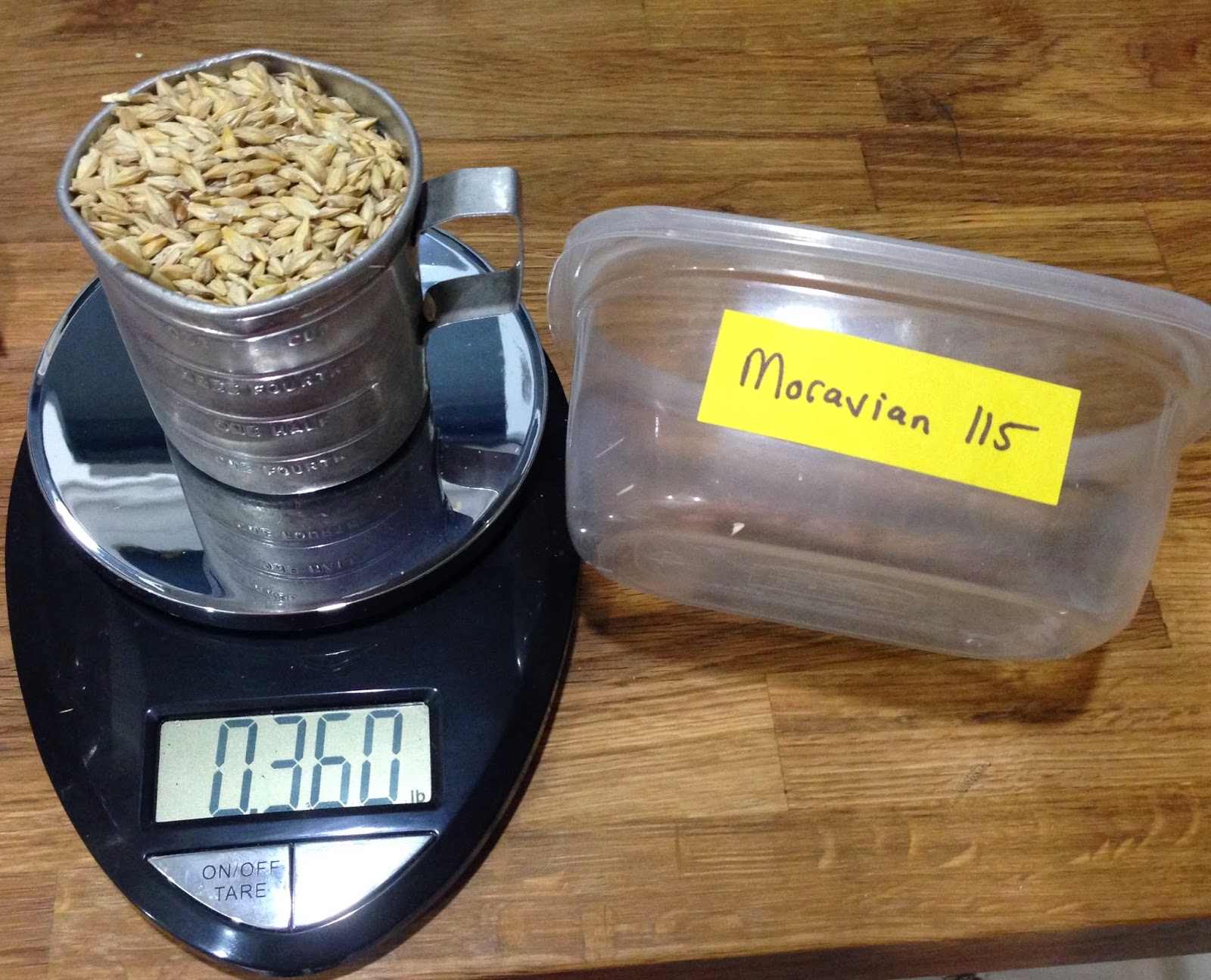
Starting my very first adventure into malting barley.  Ordered 12LBS each of Metcalf and Moravian 115 from my seed supplier in Montana.  Despite the blizzard there, he was able to mail me some beautiful 2-row barley seeds in exchange for some local brews he can't get in his area.  Thanks Ryan!

 After some online research reading and viewing videos on the malting process I've decided to use these post-Christmas days off work to attempt malting some barley.  Starting with a very very small batch of each I've begun the malting process by cleaning and steeping...


I will be allowing the grains to steep for about 48 hours occasionally replacing the water to replenish the O2.